One family’s experience with San Mateo County’s Baby Bonus Pilot Program shows how flexible financial support can make a meaningful difference during a child’s earliest years.
Every parent wants to give their child the best possible start in life. Good nutrition. A safe home. The care and attention that nurture healthy growth.
But even families who plan carefully can face circumstances that put those essentials beyond reach. In San Mateo County, where the cost of living is already high, an unexpected illness, job loss, or family emergency can quickly overwhelm household resources.
What if providing families with financial support, and trusting them to decide how best to use it, could help children get a healthier start?
That idea helped inspire the San Mateo County Baby Bonus Pilot Program, which grew out of a 2023 child poverty summit convened by former Congresswoman and current San Mateo County Supervisor Jackie Speier.
Led by First 5 San Mateo County and community partners, Baby Bonus provides participating families with $300 per month during their child’s first three years, while exploring how direct cash assistance and coordinated care can support families during the early years of childhood.
As a Baby Bonus partner, UpTogether helps deliver monthly cash payments to participating families. For Leonella and Albert, a family who shared their story with UpTogether, we learned how that support helped the family through an extraordinarily difficult time.
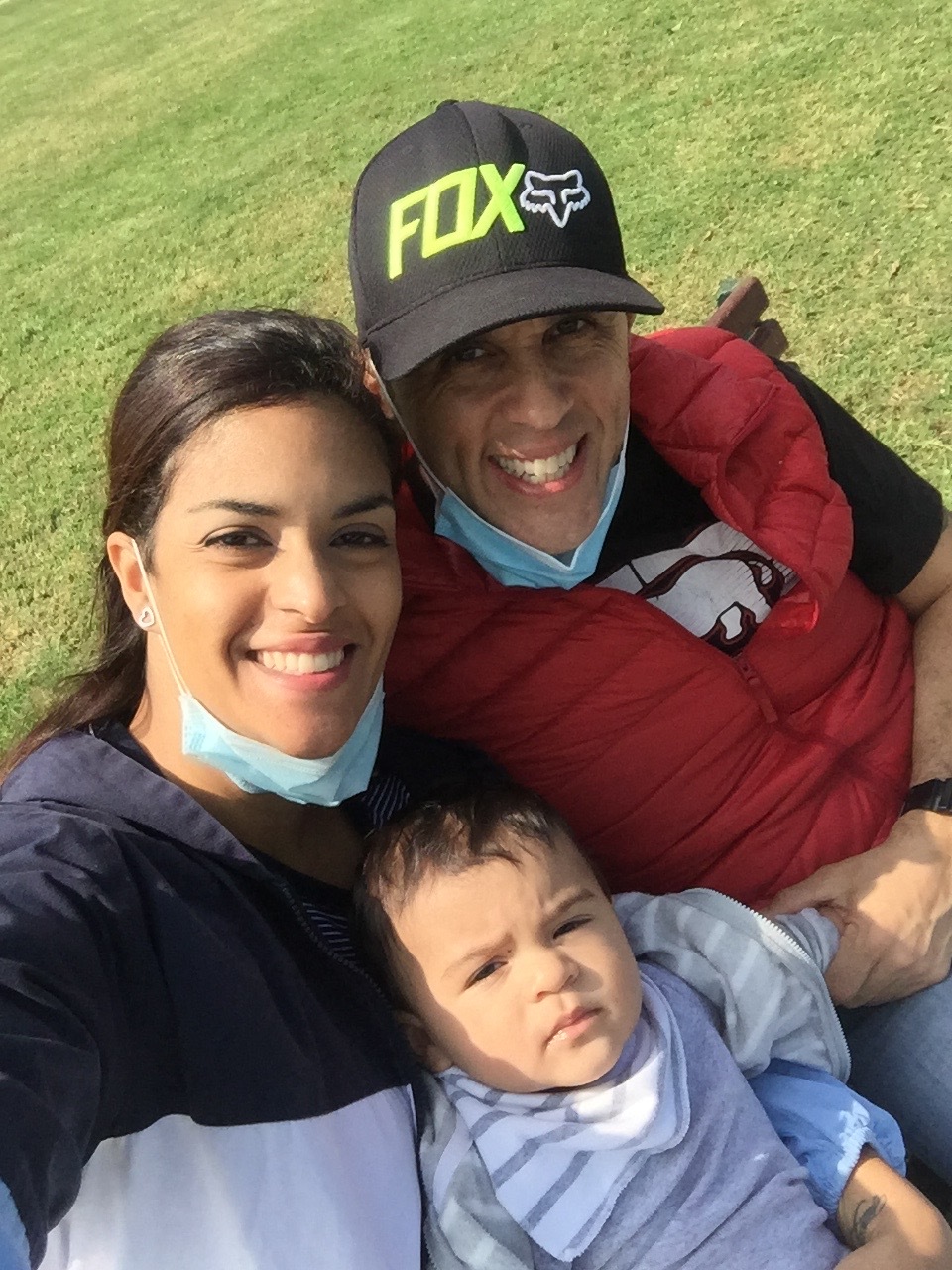
Leonella and Albert’s Story: When Hope Arrived
When Leonella learned she was expecting her youngest daughter, Sophia, her family was already facing unimaginable challenges.
Her five-year-old son, Gael, had relapsed with cancer. Her husband, Albert, made the difficult decision to leave his job to remain by Gael’s side through prolonged hospital stays and increasingly difficult treatments at UCSF.
Leonella stayed home with two-year-old Anna and prepared for Sophia’s arrival, all while struggling with the pain of watching Gael endure treatment.
“It was very hard times,” Leonella recalled.
They had worked hard to avoid debt, managed their money carefully, and built their savings. But with Albert no longer working to care for Gael, those savings were gradually depleted.
As Leonella tried to remain strong for her growing family, the joy of expecting a new baby existed alongside the fear and uncertainty surrounding Gael and the future.
Then Sophia arrived.
Her birth brought a much-needed source of hope during an extraordinarily painful time.
“I don’t know what would be of us without having Sophia,” Leonella said.
But shortly after Sophia was born, the family faced another challenge.
The baby developed severe eczema and allergic reactions that left much of her skin inflamed and uncomfortable. Steroid creams offered temporary relief, but the flare-ups continued.
Determined to find something that would help, Leonella began exploring possible causes, carefully investigating different foods and formulas, keeping a notebook to document Sophia’s reactions.
Eventually, the family discovered a goat-milk-based formula that made a remarkable difference.
“She was doing very, very well,” Albert recalled. “Her skin was like, new.” They had finally found something that worked.
But there was a problem.
The specialized formula was expensive, and their insurance wouldn’t cover it. Existing food assistance programs couldn’t provide it either.
Many of the products available through those programs contained ingredients that, in the family’s experience, triggered Sophia’s reactions. Once, when a shipment of the specialized formula was delayed and the family had to return temporarily to traditional cow’s milk formula, Sophia’s skin flared up again.
Leonella and Albert knew what worked for their daughter. They simply couldn’t afford to provide it consistently.
That’s where Baby Bonus made a difference.
Through the program, Leonella received unrestricted cash payments that allowed her to purchase the specialized formula without being limited to a list of approved products.
“Without this payment… we couldn’t afford the formula,” Albert said.
The support gave them the freedom to make choices based on their daughter’s individual needs, using the knowledge Leonella had worked so hard to gain.
When money remained after purchasing formula, they put it toward groceries and other essentials. Their careful approach to spending hadn’t changed.
What had changed was their ability to act on what they knew was best for their family.
Tragically, the family lost Gael following his long battle with cancer. His passing left a grief that no financial support could ease.
Yet throughout their journey, Leonella and Albert also found strength in their daughters, in the knowledge they gained through caring for their children, and in the community of friends, neighbors, organizations, and strangers who helped them through their darkest days.
“We met many angels,” Albert said, expressing his hope that one day he could give back to other parents.
Their story is one of extraordinary love, loss, resilience, and the importance of allowing families to make the decisions that are right for them.
This story was adapted from an original profile published by UpTogether, a Baby Bonus program partner. [Read Leonella and Albert’s full story on UpTogether’s website.]
Why Flexible Support Matters
A child’s first three years are a period of rapid development, when nutrition, healthcare, stable relationships, and nurturing experiences help build the foundation for lifelong health and learning.
But every child and every family is different. Traditional assistance programs provide essential resources, yet they cannot always anticipate individual circumstances.
Baby Bonus offers a complementary approach: providing families with direct cash support and the flexibility to decide how to use it.
For Leonella and Albert, that support didn’t eliminate their hardships. But it helped them meet an important need for their daughter, using the knowledge they had gained and the choices they believed were best for her.
Their experience offers a valuable perspective for community leaders, funders, and policymakers considering how economic support can contribute to healthier beginnings for children. While this is one powerful story, faculty at Stanford are evaluating the broader impact of Baby Bonus over time.
When families have the resources and freedom to meet their children’s individual needs, they’re better equipped to help them thrive.
Learn More
Learn more about San Mateo County’s Baby Bonus Pilot Program.
Baby Bonus is a collaborative initiative involving First 5 San Mateo County, Health Plan of San Mateo, The Jackie Speier Foundation, San Mateo County Health, County of San Mateo Human Services, faculty at Stanford University, and UpTogether.